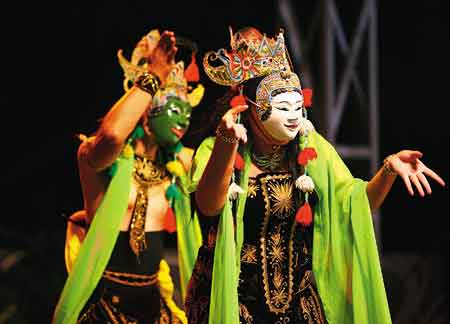
Jaipongan is a genre of art that was born from the creativity of an artist Bandung, namely Gugum Gumbira. His attention to folk art, one of which is Ketuk Tilu make a Gugum Gumbira know and know very well the patterns of movement vocabulary of dance traditions that exist in Kiliningan / Bajidoran or Ketuk Tilu. Motions openings, Pencugan, nibakeun and some minced range of motion of some art above has enough inspiration to develop a dance or art that is now known as Jaipongan.
But before performing art form it appears there is the influence of the background shape of the association. In West Java, for example, is a social dance influences from the Ball Room, which is usually in performances of dance, social dance could not be separated from the presence Ronggeng and Pamogoran. Ronggeng in social dance no longer works for the ceremony, but for entertainment or a way of slang. The existence Ronggeng the performing arts have the attraction that invites sympathy for the pamogoran. For example in Tilu Ketuk dance is so well known by the Sundanese, estimated this art is popular around the year 1916. As the folk performing arts, this art is only supported by simple elements, such as waditra which includes fiddle, drums, two kulanter, three tap dar goong. Similarly hear her dance movements that tidaN have a standard pattern of motion of sederhanz dancer costume as a reflection of populist.
But before performing art form it appears there is the influence of the background shape of the association. In West Java, for example, is a social dance influences from the Ball Room, which is usually in performances of dance, social dance could not be separated from the presence Ronggeng and Pamogoran. Ronggeng in social dance no longer works for the ceremony, but for entertainment or a way of slang. The existence Ronggeng the performing arts have the attraction that invites sympathy for the pamogoran. For example in Tilu Ketuk dance is so well known by the Sundanese, estimated this art is popular around the year 1916. As the folk performing arts, this art is only supported by simple elements, such as waditra which includes fiddle, drums, two kulanter, three tap dar goong. Similarly hear her dance movements that tidaN have a standard pattern of motion of sederhanz dancer costume as a reflection of populist.

As heard rnemudarnya type of art d above, the former pamogorar (the audience that plays a role in the performing arts activism Ketuk Tilu / Doper / Tayub), turned his attention to the performing arts Kiliningan, which in the north coast of West Java (Falkirk, Purwakarta, Jakarta, Indramayu and Subang ) known as Kiliningar, Bajidoran ibingnya patterns and events which have similarities to hear the show prior art (Ketuk Tilu / Doger / Tayub). In the meantime the existence of the dances in masks Banjet quite popular, especially in Karachi, where several motion patterns Bajidoran taken from this Banjet mask dance. In the dance choreography still reveals the patterns of tradition (Ketuk Tilu) where there are openings motions, pencugan, and several kinds of motion nibakeun mincid which in turn became the basis of the creation of dance Jaipongan_ Some basic motions in addition to Ketuk dance Jaipongan Tilu, Ibing Bajidor and Mask Banjet is Tayuban and Pencak Silat.
The emergence of dance works on awalanya Gugum Gumbira called Ketuk Tilu development, which is due to basic dance is the development of Ketuk Tiiu. The first work Gugum Gumbira still very thick with color ibing Ketuk Tilu, both in terms of choreography and iringannya, which later became popular dances as Jaipongan.
Jaipongan work of the first known by the public is Pufus Keser Bojong Leaves dance and dance Rendeng Bojong, both of which type of tai daughter and pairs (boys and girls). From the dance up a few names that are reliable Jaipongan dancers like Tati Saleh, Yeti Mamat, Eli Somali and Pepen Kurnaedi Dedi. Early occurrence of the dance had become a conversation, where the central issue is the movement of erotic darts vulgar. But from some print media exposure, name Gugum Gumbira society began to be known, especially after Dance Jaipongan in 1980 staged at the Central Station TVRI Jakarta. The impact of further increasing the popularity of the frequency of performances, both in the medium of television, celebration and celebrations held by the private sector and government.
The emergence of dance works on awalanya Gugum Gumbira called Ketuk Tilu development, which is due to basic dance is the development of Ketuk Tiiu. The first work Gugum Gumbira still very thick with color ibing Ketuk Tilu, both in terms of choreography and iringannya, which later became popular dances as Jaipongan.
Jaipongan work of the first known by the public is Pufus Keser Bojong Leaves dance and dance Rendeng Bojong, both of which type of tai daughter and pairs (boys and girls). From the dance up a few names that are reliable Jaipongan dancers like Tati Saleh, Yeti Mamat, Eli Somali and Pepen Kurnaedi Dedi. Early occurrence of the dance had become a conversation, where the central issue is the movement of erotic darts vulgar. But from some print media exposure, name Gugum Gumbira society began to be known, especially after Dance Jaipongan in 1980 staged at the Central Station TVRI Jakarta. The impact of further increasing the popularity of the frequency of performances, both in the medium of television, celebration and celebrations held by the private sector and government.

Dance Jaipongan presence has contributed greatly to the art of dance to the tenants more actively explore types of folk dances that were previously less attention. With the advent of Tarl Jaipongan, utilized by the activist art of taxi unttuk organize dance courses Jaipongan and utilized by entrepreneurs Pub-pub night as decoy invited guests, where the further development of business opportunities semacarn was formed by activists as an attempt to empower taxi economy with the name of Tan Studio or groups in some areas of West Java, for example in Subang with Jaipongan kaleran style.
Characteristic of the style Jaipongan kaleran, namely joy, erotic, humor, passion, spontaneity and simplicity (natural / is). This was reflected in the pattern of presentation of the taxi on the performer, there is a given pattern (Ibing pattern) as in art Jaipongan in Bandung, there are also dances that are not patterned (Ibing Saka), for example in Art jaipongan Subang and Falkirk. This term can be found in Jaipongan Kaleran style, especially in Subang area. In its presentation, style Jaipongan kaleran as follows: 1) Tatalu; 2) Flower Bluebird 3) Fruit Kawung Gopar; 4) Opening Dance (Ibing Patterns), usually sung by a single dancer or Sinde Tatandakan (a Sinden but do not sing but dance songs sinden / interpreter kawih); 5) Jeblokan and Jabanan, is part of the show when the audience (Bajidor) Sawer money (Jabanan) while greeting temple. Jeblokan term is defined as a couple who settled between sinden and the audience (bajidor).
Further development of Jaipongan occurred in the year 1980-1990's, where Gugum Gumbira create other dance such as Toka-Toka, Setra Sari, Sonteng, Pencug, Heron Man gut, procession-firing Leaf Puring, Rawayan and Dance Kawung Anten. From taritarian appeared several dancers Jaipongan reliable among others Iceu Effendi, Yumiati Mandiri, Miming Mintarsih, Nani, Erna, Mira Tejaningrum, Ine Dinar, Ega, Nuni, Cepi, Agah, Aa and Asep Intercessory Suryabrata.
Characteristic of the style Jaipongan kaleran, namely joy, erotic, humor, passion, spontaneity and simplicity (natural / is). This was reflected in the pattern of presentation of the taxi on the performer, there is a given pattern (Ibing pattern) as in art Jaipongan in Bandung, there are also dances that are not patterned (Ibing Saka), for example in Art jaipongan Subang and Falkirk. This term can be found in Jaipongan Kaleran style, especially in Subang area. In its presentation, style Jaipongan kaleran as follows: 1) Tatalu; 2) Flower Bluebird 3) Fruit Kawung Gopar; 4) Opening Dance (Ibing Patterns), usually sung by a single dancer or Sinde Tatandakan (a Sinden but do not sing but dance songs sinden / interpreter kawih); 5) Jeblokan and Jabanan, is part of the show when the audience (Bajidor) Sawer money (Jabanan) while greeting temple. Jeblokan term is defined as a couple who settled between sinden and the audience (bajidor).
Further development of Jaipongan occurred in the year 1980-1990's, where Gugum Gumbira create other dance such as Toka-Toka, Setra Sari, Sonteng, Pencug, Heron Man gut, procession-firing Leaf Puring, Rawayan and Dance Kawung Anten. From taritarian appeared several dancers Jaipongan reliable among others Iceu Effendi, Yumiati Mandiri, Miming Mintarsih, Nani, Erna, Mira Tejaningrum, Ine Dinar, Ega, Nuni, Cepi, Agah, Aa and Asep Intercessory Suryabrata.
Today Dance Jaipongan be called as one of the identity of the arts of West Java, this is evident in several important acaraacara regarding guests from foreign countries who come to West Java, it was greeted with Dance Jaipongan. Similarly with art missions to foreign countries is always equipped with Jaipongan Dance. Dance Jaipongan affect many other art-art that exist in the community of West Java, both in the art of wayang, gamelan, Genjring / terebangan. DAMAS jaipong and almost all the performances on folk music and modern dangdut Jaipong collaborated with the art Pong-Dut.
10:10 PM | 0
comments